Common problems when booking Baldock rubbish removal services
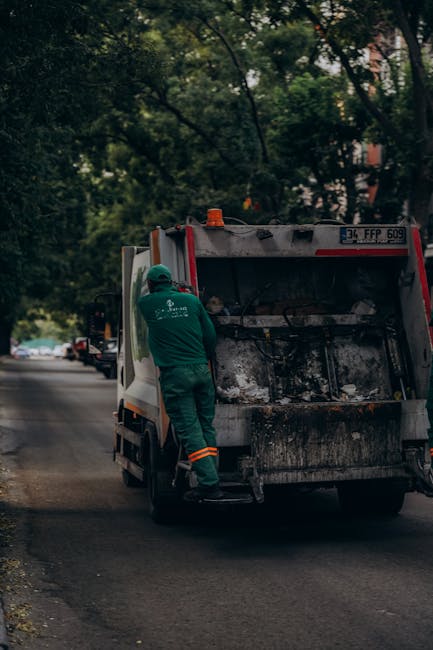
Booking rubbish removal should feel straightforward. You want the waste gone, the price to make sense, and the team to show up when they say they will. Simple, right? In practice, quite a few things can get in the way. The most common problems when booking Baldock rubbish removal services are usually not dramatic, but they are annoying: unclear quotes, missed access details, awkward item types, last-minute changes, and the classic "that wasn't included" surprise.
This guide walks through what tends to go wrong, why it matters, and how to avoid the usual headaches before they cost you time or money. If you are comparing providers, planning a clearance at home, or trying to make sense of what is and is not included, this should help you book with a lot more confidence.
And yes, a few small checks upfront can save a proper mess later. Let's face it, nobody wants a skip-sized problem on a busy Tuesday morning.
Why booking problems matter
When rubbish removal booking goes wrong, the impact is rarely just one thing. A delayed collection can hold up a house move, leave a garage unusable for another week, or turn a simple clear-out into several rounds of phone calls. If you are already dealing with a loft packed full of old boxes or a builder's pile after a renovation, that friction matters more than people think.
The biggest issue is usually expectation. Customers often assume the booking price includes everything, while the provider may be pricing only a certain volume, a specific waste type, or access that is easy enough for loading. If those assumptions do not match, the day becomes awkward very quickly.
There is also a trust angle. A clear booking process is a good sign that the operator understands house clearance, waste handling, access planning, and customer service rather than just turning up with a van and hoping for the best. For readers comparing local options, this is where a well-structured service page like waste removal can be more useful than a vague promise on a flyer.
In our experience, the problems that seem small at first are the ones that bite. A missing parking note, a narrow hallway, an extra mattress, one awkward sofa that needs two people to carry it - these details are rarely dramatic, but they do shape the final result.
How rubbish removal booking usually works
Most rubbish removal bookings follow a fairly simple pattern. You describe the waste, the provider estimates the load, a collection time is agreed, and then the team arrives to remove and sort what can be taken. That sounds easy enough. The tricky bit is the detail behind each step.
Here is the usual flow:
- You describe the waste. That may include furniture, general household items, garden waste, DIY debris, office clutter, or a mix of several things.
- The provider estimates the job. This is often based on volume, item type, labour needed, and how easy it is to access.
- A quote or guide price is given. Some companies can only give a firm price after seeing the items in person.
- A collection time is booked. The team may need driveway space, parking access, or help understanding whether items are upstairs, in a loft, or behind locked gates.
- Removal happens on site. The final price may change if the actual load differs from what was described.
- Items are separated for reuse, recycling, or disposal. Good operators will try to direct waste responsibly and keep you informed about what they can and cannot take.
Problems usually appear when one of those steps is rushed. A customer might send a quick photo but forget the pile behind the sofa. Or they may say "a bit of garden waste" when, in reality, there are also broken fence panels, a radiator, and a heavy bag of rubble. Not a disaster, but it changes the job shape quite a lot.
If your clear-out is more specific, it helps to read about the relevant service first, such as house clearance, flat clearance, garage clearance, or loft clearance. That sort of context reduces the chance of booking the wrong type of help.
Key benefits and practical advantages
When the booking goes smoothly, the benefits are obvious. But there are a few less obvious advantages too.
- Better cost control. Clear information usually means fewer add-ons and fewer disputes on the day.
- Less stress. You know who is coming, what they are taking, and what access they need.
- Faster clearance. The crew can load efficiently if they know the waste type and location in advance.
- Lower risk of rejected items. Some objects need separate handling, so it helps to know that before the van arrives.
- Better use of space. This matters if you are clearing a home, business premises, a garden, or an end-of-tenancy property.
There is also a practical environmental benefit. A well-run service will sort items sensibly, which can support reuse and recycling. If sustainability matters to you - and for many people in Baldock it does - it is worth looking at a provider's recycling and sustainability approach before you book.
Expert summary: The best rubbish removal booking is not just the cheapest one. It is the one with the clearest scope, the fewest assumptions, and the right access details from the start. That is where most of the problems disappear.
Who this is for and when it makes sense
This topic matters to more people than you might expect. Homeowners, tenants, landlords, letting agents, tradespeople, shop owners, and office managers all run into similar booking issues. The job changes, but the pain points are oddly familiar.
You will particularly benefit from thinking ahead if you are:
- clearing a property before or after a move
- dealing with bulky furniture that will not fit in a car
- sorting out a loft, garage, or shed that has become a dumping ground over the years
- managing builder's waste after a renovation or repair
- emptying a small business unit or office space
- trying to avoid a council-style runaround with multiple trips and permits
It also makes sense if you are short on time. Truth be told, many people book rubbish removal because they simply do not want a weekend lost to lifting, sorting, and queueing at a site. Fair enough. Time matters.
If your job is commercial rather than domestic, look closely at services such as business waste removal or office clearance. They are often better suited to premises that have mixed waste, documents, furniture, and limited access hours.
Step-by-step guidance
The easiest way to avoid booking problems is to treat the process like a mini project. Nothing fancy. Just a few disciplined steps.
1. Make a full waste list
Walk through the space and write down everything that needs to go. Include large items, loose bags, broken pieces, and anything stored in corners or behind doors. If you are only thinking about the obvious pile in the middle of the room, you will probably understate the job.
2. Separate the waste by type
Put similar items together where you can. Furniture, garden cuttings, building debris, electricals, and general rubbish may all need different handling. A mixed load is fine, but it should be described honestly.
3. Photograph the waste from several angles
One photo rarely tells the whole story. Take a few from the doorway, a wider shot, and a close-up of anything bulky or unusual. You do not need to stage a photo shoot. Just give the provider enough to understand what is there.
4. Check access and parking
This is where many bookings wobble. Think about steps, tight hallways, stairwells, locked gates, shared driveways, parking restrictions, and long carrying distances. A team can work around awkward access, but they need to know about it before arrival.
5. Confirm what is excluded
Some items may need specialist handling or may not be accepted at all. The provider should be clear about this. If they are not, ask directly. Do not leave it vague and hope for the best. That approach has a funny way of becoming expensive.
6. Ask how pricing works
Some providers quote by load size, some by time and labour, and others by item type. Ask whether the quote is fixed or indicative, and what could change it. If you want extra clarity, compare the booking conversation with the guidance on pricing and quotes.
7. Get the booking details in writing
Even a short confirmation message helps. Date, time window, access notes, waste type, and anything promised on the price should all be clear. It sounds boring, but boring paperwork is often what keeps jobs calm.
Expert tips for better results
Here are the things that make the biggest difference in real life.
- Be specific about quantity. "A few bags" means something different to different people. Say how many bags, what size, and whether anything is oversized.
- Mention stairs early. A first-floor flat with no lift is a very different job from a ground-floor garage clear-out.
- Flag mixed waste. A sofa plus old plasterboard plus hedge cuttings is not the same as a sofa alone.
- Ask about timing windows. A 2-hour arrival window may be normal, but if you have a building contractor waiting, that matters.
- Check how payment works. Good booking confidence often comes from knowing what methods are accepted and when payment is due. If this is important to you, take a look at payment and security.
- Choose the right service page first. If the job is very item-specific, use the nearest match such as furniture clearance or furniture disposal rather than assuming every rubbish removal job is identical.
A small human note here: people often underestimate how much room old furniture takes up until it is in a hallway. Then suddenly the hallway looks like a narrow tunnel in a Victorian house. Happens all the time.
If you are booking a seasonal job - say, after a garden tidy in spring or a clear-out before winter - build in a little extra time. The weather, the daylight, and the general pace of the day can all affect how smooth the visit feels.
Common mistakes to avoid
Most booking problems come from a handful of very ordinary mistakes. Easy to make. Easy to avoid once you know them.
- Giving a rough description and leaving it there. "A bit of waste" is too vague for most jobs.
- Forgetting access issues. The crew cannot read your staircase from the road, annoying as that may be.
- Assuming all waste is acceptable. Some materials need special handling or cannot be taken in the same way.
- Not checking if the price is fixed. A quote without conditions is much easier to trust than one that changes later.
- Leaving the waste scattered. A tidy pile is faster to assess and usually easier to remove.
- Booking the wrong service category. A garden job is not the same as a builders' job, and a flat clear-out has different challenges again.
A practical example: someone books a "garage clearance" but the garage also contains paint tins, a fridge, and a large amount of building rubble. That is not impossible to handle, but it is no longer just a straightforward garage clearance. The difference matters.
For jobs with construction leftovers, see builders waste clearance. For outdoor overgrowth and cuttings, garden clearance is the better fit. Little distinctions, yes, but they stop a lot of confusion.
Tools, resources and recommendations
You do not need specialist software to book rubbish removal well, but a few simple tools help a lot.
- Phone camera for clear photos of the waste and access points
- Notes app or paper checklist for item lists and measurements
- Room-by-room walk-through to catch hidden items in lofts, garages, sheds, and cupboards
- Bin bags or labels to separate what should stay from what should go
- Text or email confirmation so the booking details are easy to refer back to
From a customer journey point of view, it also helps to learn about the company itself. Pages like about us and insurance and safety can tell you a lot about how carefully a provider works. That is not just fluffy reassurance. It is useful due diligence.
If you are clear about your priorities, you can compare providers in a more grounded way. For example, if speed matters most, ask about availability. If disposal standards matter most, ask about recycling and sorting. If price matters most, ask exactly what affects the final bill.
Law, compliance and best practice
For rubbish removal, compliance is not just paperwork. It is part of the service quality. The key point is simple: reputable operators should handle waste responsibly, move it safely, and avoid putting the customer in a difficult position.
In the UK, customers are wise to check that the provider follows sensible waste-handling practices, uses suitable vehicles and loading methods, and is open about what happens to the waste after collection. For certain items, especially electricals, heavy materials, or anything potentially hazardous, best practice is to ask how the item will be handled rather than assuming.
You do not need to become a waste-law expert overnight. But it does help to know that:
- the waste should be described accurately before booking
- the provider should be able to explain any restrictions
- items should be moved without creating avoidable damage or danger
- the booking terms should be clear, especially for access, cancellation, and additional charges
Good operators usually have visible policy pages that show how they approach these matters. If you want to dig into the fine print, terms and conditions and complaints procedure are worth checking before you confirm anything.
There is also a basic safety angle. Lifting, sharp edges, broken glass, damp materials, and tight staircases can all turn a quick job into a risky one. A proper provider should manage that risk with care. If they sound casual about it, that is not charming. It is a warning sign.
Options and comparison
Different clearance approaches suit different situations. Here is a simple comparison to help you choose more confidently.
| Option | Best for | Common booking issue | Why people choose it |
|---|---|---|---|
| General rubbish removal | Mixed household waste, bags, small items | Scope is too broad unless described carefully | Fast and flexible for everyday clear-outs |
| House clearance | Whole-property or room-by-room clearances | People forget loft, shed, or hidden storage items | Useful during moves, probate, or major decluttering |
| Flat clearance | Flats, apartments, upper floors | Access and stairs are often underexplained | Better suited to shared buildings and limited parking |
| Garage clearance | Heavy clutter, tools, boxes, broken items | Mixed waste often includes excluded materials | Good for freeing up storage space quickly |
| Office clearance | Desks, chairs, files, small business waste | Timing around business hours is overlooked | Helps reduce downtime and keep operations tidy |
| Builders waste clearance | DIY debris, renovation waste, rubble | Load weight and material type are often underestimated | Handy after works when the site needs clearing fast |
If you are unsure which path fits, start with the most specific service that matches the waste. That single choice can prevent a lot of back-and-forth.
Case study or real-world example
Here is a realistic example from the kind of booking situation people run into all the time.
A homeowner in Baldock is getting ready to list a property. The spare room has old furniture, a broken bookcase, a couple of bags of soft furnishings, and a chest of drawers full of odds and ends. They ring up asking for "rubbish removal" and give a quick estimate based on the visible items only.
On the day, the team arrives and finds two things that were not mentioned: a heavy filing cabinet and a box of mixed loft items in the wardrobe. Nothing malicious, just forgotten. The job now takes longer, and the provider has to revisit the price because the load is larger than expected.
What would have avoided the issue?
- a full room-by-room check before booking
- photos of the wardrobe and storage corners
- clear mention of the filing cabinet
- a note that the waste included both furniture and mixed household items
The same story could play out with a garden, a garage, or a small office. The pattern is always the same: the clearer the description, the smoother the booking.
And honestly, that one extra ten minutes of checking often saves an awkward conversation later. Worth it.
Practical checklist
Use this checklist before you book. It is simple, but it catches most of the avoidable issues.
- Have I listed every item that needs removing?
- Have I checked upstairs, lofts, cupboards, sheds, and corners?
- Have I taken clear photos from more than one angle?
- Have I explained access, parking, stairs, and any shared entrances?
- Do I know whether the price is fixed or subject to change?
- Have I asked about any items that may be restricted or excluded?
- Do I know when the team is due to arrive?
- Have I checked the provider's booking terms and complaints process?
- Have I thought about whether I need a specialist service such as furniture disposal, office clearance, or garden clearance?
- Am I comfortable with how payment and security are handled?
If you can tick most of those off, you are already ahead of the average booking. Not glamorous, but effective.
Conclusion
The common problems when booking Baldock rubbish removal services are usually not difficult to solve. They come down to clarity, access, item type, price structure, and expectations. Once those are handled properly, the whole experience becomes much easier.
So, if you are planning a clear-out, take the extra few minutes to describe the job properly, check the access, and choose the most relevant service page for the waste you actually have. That small bit of care can save you from the annoying, costly, and frankly unnecessary problems that slow everything down.
For a fuller look at the company background, service standards, and related help pages, you may also find home clearance and furniture clearance useful starting points.
Get a free quote today and see how much you can save.
Book wisely, check the small details, and the rest tends to fall into place. A tidy space really does change the mood of a day.
Frequently Asked Questions
What are the most common problems when booking rubbish removal?
The most common problems are unclear pricing, poor access information, forgetting to mention bulky or awkward items, and not understanding what the provider will or will not take.
Why does the final price sometimes change on the day?
The price can change if the actual volume, weight, or mix of waste is different from what was described during booking. Access issues can also affect labour time.
How can I avoid hidden charges?
Give a full description of the waste, ask whether the quote is fixed, and confirm what factors could change the price before the team arrives.
Do I need to sort the rubbish before collection?
Not always, but separating items by type helps. It makes the booking clearer and can reduce confusion about what is being removed.
What should I tell the provider before they arrive?
Tell them about item type, quantity, stairs, parking, shared entrances, gates, and any large or heavy pieces. That information makes a big difference.
Is rubbish removal the same as house clearance?
Not quite. Rubbish removal often covers mixed waste and smaller loads, while house clearance is usually broader and may involve clearing rooms or entire properties.
What if I have garden waste mixed with furniture or rubble?
Say so when booking. Mixed waste is common, but the provider needs to know because different material types can affect loading and handling.
How far in advance should I book?
That depends on urgency and availability, but it is smart to book as soon as you know the job details. Leaving it too late can limit your choice of time slot.
What should I check in the terms and conditions?
Look for pricing conditions, cancellation rules, access requirements, restrictions on certain items, and anything that might trigger an extra charge.
Can I book rubbish removal for a flat or upper-floor property?
Yes, absolutely. Just make sure the provider knows about stairs, lifts, narrow corridors, parking, and any building restrictions before the booking is confirmed.
How do I know if I have chosen the right service?
Match the service to the waste you actually have. For example, use flat clearance for apartment clear-outs, builders waste clearance for renovation debris, and office clearance for business premises.
What is the safest way to choose a provider?
Choose a provider that is clear about pricing, access, safety, and waste handling. A good website, clear policies, and sensible communication are usually strong signs.