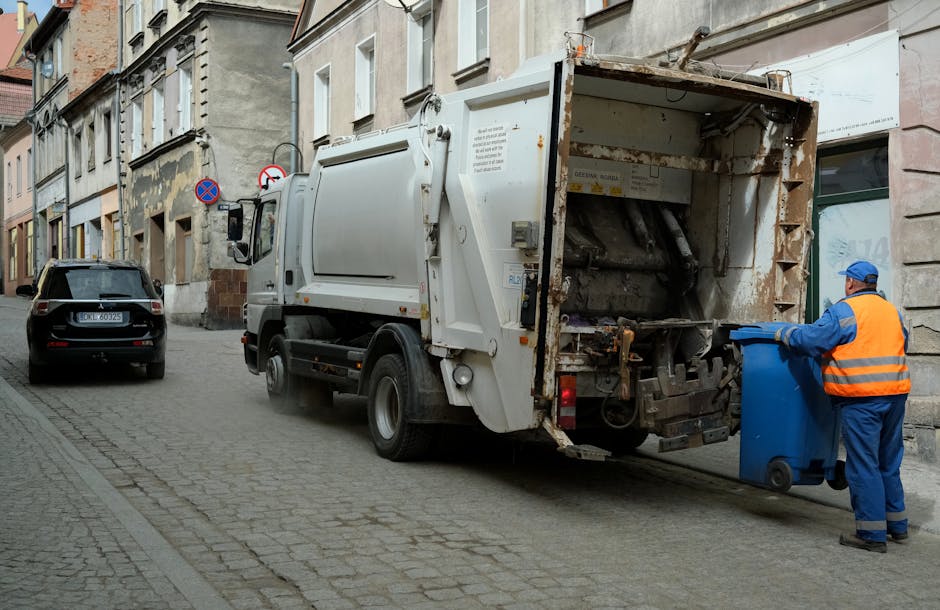
Avoid delays with Baldock rubbish collection on narrow roads
If you have ever tried to organise a rubbish collection on a street where two parked cars and a wheelie bin can make everything feel a bit tight, you will know the problem straight away. In Baldock, narrow roads can slow a collection down more than people expect, especially when access is limited, loading has to be done carefully, or the truck simply cannot stop where it should. The good news is that avoid delays with Baldock rubbish collection on narrow roads is not about luck. It is about planning, clear communication, and choosing the right collection approach from the start.
This guide explains what makes narrow-road collections tricky, how the process usually works, and what you can do to keep everything moving. It also covers practical mistakes, useful checks, and the best ways to stay calm when the street is awkward, the pavement is busy, and time is ticking. Truth be told, most delays are avoidable once you know what to look for.
You will also find a few local-service pointers and a simple checklist you can use before collection day. If you are comparing options for a house move, a garage clear-out, or ongoing waste removal, the advice here should make the whole job feel much less stressful.
Table of Contents
- Why Avoid delays with Baldock rubbish collection on narrow roads Matters
- How Avoid delays with Baldock rubbish collection on narrow roads Works
- Key Benefits and Practical Advantages
- Who This Is For and When It Makes Sense
- Step-by-Step Guidance
- Expert Tips for Better Results
- Common Mistakes to Avoid
- Tools, Resources and Recommendations
- Law, Compliance, Standards, or Best Practice
- Options, Methods, or Comparison Table
- Case Study or Real-World Example
- Practical Checklist
- Conclusion
- Frequently Asked Questions
Why Avoid delays with Baldock rubbish collection on narrow roads Matters
Narrow roads do not just make collections slower; they can affect almost every part of the job. A vehicle may need to park farther away than planned, crews may need to carry items by hand for longer distances, and even a small timing issue can create a domino effect. One blocked driveway, one tight turning point, one badly placed van, and suddenly the whole collection is running late. That is not just inconvenient. It can also increase disruption for neighbours and make the job feel rushed.
In practical terms, the aim is simple: make sure the collection team can reach your waste safely, load it efficiently, and leave without causing a scene on the street. That matters whether you are clearing a single bulky item, a full property, or a stack of mixed waste from a home improvement project. Narrow access tends to expose weak planning very quickly, which is why a bit of preparation goes a long way.
There is also a customer-experience side to this. Nobody wants a collection that starts with a stressy phone call, a crew circling the block, or confusion about where to meet. A good plan reduces that friction. And if you are arranging something more involved, such as a house move or a complete clear-out, a reliable process can save a surprising amount of time.
Expert takeaway: on narrow roads, the main delay rarely comes from the waste itself. It usually comes from access, parking, turning space, and unclear instructions.
That is why services linked to waste removal, house clearance, or home clearance can be especially useful when the street layout is tight. They are set up for real-world access issues, not just tidy driveway collections.
How Avoid delays with Baldock rubbish collection on narrow roads Works
The process starts before anyone arrives. The most efficient collections usually begin with a quick assessment of access: where the vehicle can stop, whether the road allows safe loading, how much walking distance is involved, and whether any large items will need two people to lift. If the collection team knows that a road is narrow, they can plan accordingly, but they still need accurate information from you. Guessing is where delays creep in.
Typically, the workflow looks something like this:
- Initial details are shared. You explain what needs to go, where it is located, and what access is like.
- Collection is scheduled. A suitable time slot is chosen, often with enough flexibility to deal with parking or loading challenges.
- Arrival and access check. The crew looks for the safest stopping point and confirms the best way to move items.
- Loading is completed efficiently. Waste is carried out in a planned order, with heavier or awkward items handled first if needed.
- Sorting and disposal follow. Items are separated where possible so the load can be handled responsibly, including recycling where appropriate.
On narrow roads, the collection is often less about speed and more about rhythm. A steady, well-organised load-out tends to beat a rushed approach every time. That might sound obvious, but in real life it makes the difference between a smooth morning and a frustrating wait outside the house.
If the waste includes furniture, loft contents, garden debris, or items from a garage clear-out, it can help to use a service matched to the load. For example, furniture clearance, garage clearance, or garden clearance can be better suited than a generic one-off arrangement, especially when access is awkward and the team needs to move things efficiently.
Key Benefits and Practical Advantages
When collections are planned properly for narrow roads, the benefits are not subtle. They show up in saved time, fewer missed steps, and a much calmer experience for everyone involved. Let's face it, no one enjoys standing in the drizzle on a Tuesday morning wondering whether the collection vehicle has been trapped behind a delivery van.
- Less waiting around: accurate access details help avoid unnecessary back-and-forth.
- Safer loading: crews can prepare for manual handling, which reduces rushed lifting.
- Fewer neighbour issues: good planning cuts down on road blockage and awkward knock-on effects.
- Better scheduling: the right slot gives enough room for parking or repositioning.
- More efficient disposal: when items are grouped properly, the collection is easier to sort responsibly.
There is another practical advantage people do not always think about: a narrow-road collection that runs smoothly tends to be less stressful for the household too. You are not moving items twice, you are not sending someone up and down the stairs to answer questions, and you are not trying to remember whether the spare gate key is in the kitchen drawer. Small thing, maybe. But it matters on the day.
If your collection forms part of a larger project, such as a bigger clear-out or work on a business site, the right support can also help you keep momentum. For instance, builders waste clearance and business waste removal are useful where access is tight but deadlines still matter.
Who This Is For and When It Makes Sense
This approach is useful for anyone dealing with restricted access, but some situations make it particularly worthwhile. Narrow roads tend to show up in older parts of town, terraces with on-street parking, small lanes, shared access streets, and areas where turning space is limited. If that sounds familiar, you are already in the target group.
It makes sense if you are:
- clearing a house with limited front access
- moving items from a flat or upper floor with awkward stairways
- dealing with bulky furniture that cannot be left outside for long
- removing garden waste from a property with a narrow side path
- managing regular business waste from premises with restricted loading space
- coordinating a renovation where materials and rubble need fast removal
People often assume narrow-road problems only apply to huge jobs. Not really. A single sofa or wardrobe can cause delays if the street is tight and the parking situation is messy. One extra minute finding the right stopping point can turn into ten or fifteen minutes very quickly.
And if the property is upstairs, or the waste is scattered between rooms, the challenge becomes more obvious. That is where flat clearance, loft clearance, or office clearance may be more appropriate than trying to improvise with a smaller, less flexible setup.
Step-by-Step Guidance
If you want to avoid delays, treat the collection like a small logistics job. Nothing dramatic, just enough structure to stop the usual headaches.
- Measure the access in plain terms. You do not need engineering drawings. Just know whether a vehicle can stop nearby, whether the road bends sharply, and whether there is space to lift items out safely.
- List the waste clearly. Separate bulky items, bagged waste, broken materials, and anything fragile. This helps the crew judge how much time and handling will be needed.
- Take a few quick photos. Images of the road, front access, gate, stairs, or parking area can save a lot of misunderstanding. It is a tiny effort for a big return.
- Agree where the collection will happen. Be specific. "Outside the front door" is good. "Somewhere on the road" is not.
- Keep pathways open. Move cars, bins, plant pots, and low obstacles if you can do so safely.
- Bundle items sensibly. Smaller waste in bags or boxes is easier to load than loose bits scattered everywhere.
- Build in a little buffer time. If the road is busy at school-run time or during delivery hours, be realistic about timing.
A simple example: if you are clearing a garage on a narrow terrace street, place the items closest to the entrance first, and keep the route clear. That way the loading pattern is obvious as soon as the team arrives. No hunting around. No "wait, it's actually behind the bike." We have all done that sort of thing, and it only slows everyone down.
If you want to combine access planning with a more complete service, you might also look at furniture disposal where old items need to be removed safely and responsibly rather than simply shifted out of the way.
Expert Tips for Better Results
A few small habits make a noticeable difference on narrow roads. They are not fancy, but they work.
- Choose a quieter window where possible. Mid-morning can be easier than school-run or commuter peaks.
- Tell the team about any blind bends or low walls. These are the details that matter on a tight street.
- Don't overfill bins or pile items at random. Neater loads are quicker to assess and easier to move.
- Allow for manual carrying distance. If the vehicle cannot park right outside, the collection still needs to flow.
- Separate reusable items early. It makes the final sort quicker and can reduce confusion on the day.
- Have one point of contact. Too many voices on site creates delay. One person, one plan. Simple.
Another useful tip: check whether the collection involves mixed material. A load with wood, metal, general rubbish, and old furniture is more complex than a single-category removal, so it helps to say that upfront. A crew can then bring the right equipment and plan the order of work more sensibly.
For heavier, project-based waste, builders waste clearance can be a better fit than a standard collection, especially if the road is tight and the waste is awkward to lift. Better fit usually means fewer delays. Funny how that works.
Common Mistakes to Avoid
The most common mistakes are usually simple, but they create the biggest headaches. The good thing is that they are easy to prevent once you know them.
- Assuming the vehicle can park anywhere. Narrow roads often have more restrictions than they first appear to.
- Leaving everything until the last minute. Last-minute sorting is where delays and confusion are born.
- Hiding important access details. A steep drive, low arch, or tight bend should never be a surprise.
- Forgetting about parked cars. If your street fills up during the day, plan for it.
- Mixing dangerous or restricted items with general waste. This can create safety issues and slow everything down.
- Not checking the route from the property to the vehicle. One obstructed gate or narrow side passage can change the whole job.
There is also a quieter mistake: trying to make the collection fit your own schedule without accounting for access. You might think, "It should only take ten minutes." Maybe. But if the road is busy, the route is awkward, and the waste is a bit more mixed than expected, it can easily take longer. Better to allow some breathing space.
One more thing. If you are clearing an entire property, the scale can creep up on you. A "few bits" in the morning can turn into a full van by lunch. That is exactly when a broader service such as house clearance or home clearance becomes more practical than piecing it together yourself.
Tools, Resources and Recommendations
You do not need specialist kit to prepare well, but a few basics help a lot.
- Phone camera: take clear photos of the access route, front of property, and any tight corners.
- Measuring tape: useful if you are unsure about gaps, gates, or stairwells.
- Marker labels or tape: handy for identifying what stays, what goes, and what needs a separate pile.
- Gloves and sturdy footwear: sensible if you are moving items beforehand.
- Checklist on paper or notes app: small, but very useful when the day gets busy.
In practical terms, the most valuable resource is still good communication. A clear description of the road and waste load is worth more than a polished booking form that leaves out the important bits. If you are arranging something business-related, it can also help to review pricing and quotes so you know what is included and what might affect timing or access arrangements.
For customers who care about disposal outcomes, recycling and sustainability is a useful page to review as well. Narrow-road logistics and responsible disposal can go hand in hand, even if the street itself feels a bit cramped on the day.
Law, Compliance, Standards, or Best Practice
For rubbish collection in the UK, the exact legal and operational requirements depend on the type of waste, where it came from, and who is handling it. Rather than overstate anything, it is safest to say this: waste should be collected, moved, and disposed of responsibly, with care taken to avoid hazards, obstruction, and unnecessary nuisance. If materials are unusual, bulky, or potentially harmful, the collection needs to be planned accordingly.
Best practice on narrow roads usually includes:
- safe manual handling for heavy or awkward items
- clear access planning before arrival
- reasonable parking arrangements that avoid blocking neighbours or traffic unnecessarily
- sorting waste properly so suitable items can be separated for recycling where possible
- transparent communication about timing, access, and what is included
If the waste is from a workplace, trade job, or renovation, extra care may be needed because mixed construction debris and commercial material can behave differently from ordinary household waste. In those cases, choosing the right service matters. A good provider should be willing to explain how they will handle access issues and what happens if the road is tighter than expected. That transparency is a very good sign.
It is also sensible to check that the provider operates with clear policies around safety, payment, and complaints. Pages such as health and safety policy, insurance and safety, payment and security, and terms and conditions can give you a better sense of how organised and accountable the service is. That sort of background matters more than people think.
Options, Methods, or Comparison Table
Different approaches suit different properties. The best choice depends on access, waste volume, and how quickly you need the job done.
| Method | Best for | Strengths | Limitations on narrow roads |
|---|---|---|---|
| Single-item collection | One sofa, appliance, or bulky item | Simple, quick to organise | Still depends on parking and loading space |
| Full property clearance | House moves, bereavement clearances, large declutters | Efficient for bigger jobs, less piecemeal effort | Needs careful access planning and more time |
| Room-by-room clearance | Flats, lofts, garages, offices | Good where items are spread out | Can be slower if routes are tight |
| Trade waste removal | Builders, decorators, small contractors | Useful for regular or project waste | Must account for mixed materials and volume |
In many Baldock streets, the smartest choice is the one that minimises movement from the property to the vehicle. Fewer trips usually means fewer delays. That is why the shape of the job matters just as much as the amount of rubbish involved.
If you are unsure which route suits you, comparing flat clearance, garage clearance, and office clearance can help you match the method to the space rather than forcing the other way around.
Case Study or Real-World Example
A common situation goes like this. A household on a narrow Baldock street needs to remove a sofa, a broken chest of drawers, and several bags of mixed household waste. The road has on-street parking on both sides, and during the day it fills up quickly. If the collection team arrives without a clear parking plan, they may need to stop farther away and carry each item by hand. That is manageable, but it adds time.
Now compare that with a better-planned version. The customer sends a couple of photos, explains where the items are stored, and mentions that the road is tight around lunchtime. The collection is booked for a quieter window. A loading point is agreed in advance. The items are grouped by type before the team arrives. The result? Much faster turnaround, fewer interruptions, and no awkward backtracking across the pavement with a bulky sofa wobbling slightly in the damp morning air.
That is the kind of small, unglamorous planning that saves the day. Not exciting. Very effective. And, honestly, it keeps everyone in a better mood.
The same logic applies to bigger clearances too. For example, if the job includes old cabinets, wardrobes, or loose furniture, pairing the visit with furniture clearance can make the whole process cleaner and faster than trying to split it into multiple smaller visits.
Practical Checklist
Use this checklist before collection day. It is simple, but it catches most of the avoidable delays.
- Have I described the road access clearly?
- Have I shared photos if the street or driveway is tight?
- Do I know where the vehicle can stop safely?
- Are all items grouped and ready to move?
- Have I cleared bins, cars, and obstacles from the route?
- Do I need the team to lift items from upstairs, a loft, or a garage?
- Is the waste mixed, heavy, or likely to need extra handling?
- Have I allowed enough time for busy-road conditions?
- Do I understand what is included in the service?
- Have I reviewed any relevant policy or quote details?
Quick summary: if the street is narrow, the winning formula is clear access details, sensible timing, and a collection plan that respects the layout of the road. That is really the heart of it.
Conclusion
Narrow roads do not need to derail your rubbish collection. They just need a bit more thought. Once you understand the access issues, plan around parking and turning space, and share enough detail before the visit, the collection becomes far more predictable. In other words, the delay risk drops sharply when the job is prepared properly.
For household clear-outs, trade waste, furniture removal, or full property work, the safest approach is the one that matches the road as well as the rubbish. Keep pathways open, be realistic about timing, and choose a service that understands local access challenges. Small adjustments. Big difference.
Get a free quote today and see how much you can save.
And if you are standing by the front door on collection day with everything ready, it does feel good when the whole thing just flows. Quietly good. The best kind, really.
Frequently Asked Questions
Why do rubbish collections get delayed on narrow roads?
Delays usually happen because the vehicle cannot park close enough, turning space is limited, or the crew needs more time to carry waste from the property to the road. Narrow streets magnify small access problems.
How can I help speed up a Baldock rubbish collection?
Give clear access details, share photos if needed, keep the route open, and group the waste neatly before the collection team arrives. Good communication is often the biggest time-saver.
Should I mention parked cars and road width before booking?
Yes, absolutely. Parked cars, tight bends, and limited stopping space can all affect the plan. If the team knows in advance, they can schedule and prepare more effectively.
What if the collection vehicle cannot stop outside my house?
If the vehicle has to park farther away, the collection may still go ahead, but it can take longer. In some cases, the crew may need to carry items by hand from a more suitable stopping point.
Is it better to book early in the morning?
Often, yes, especially if your road gets busier later in the day. But timing depends on the street itself. A quieter mid-morning slot can also work well in some areas.
Do I need to separate items before collection?
It helps a great deal. Separating furniture, bags, loose waste, and any heavier items makes loading faster and reduces confusion. It is not always essential, but it is usually worth doing.
What kind of services are best for awkward access?
Services like house clearance, flat clearance, or waste removal can be a strong fit when access is tight because they are built for more than just curbside pickup.
Can narrow-road collections still be efficient?
Yes. With good planning, the right time slot, and clear instructions, narrow-road collections can run very smoothly. The key is preparation, not speed for its own sake.
What should I tell the collection team about access?
Tell them about parking limits, road width, gates, stairs, side passages, low walls, and anything that could slow down loading. If the route to the vehicle is awkward, say so plainly.
Are business waste collections handled differently from home collections?
They can be. Business waste may involve different volumes, recurring pickups, or trade materials, so the access plan should reflect that. If the premises are on a narrow street, this becomes even more important.
What if I need furniture or bulky items removed from a tight street?
That is where planning really matters. Bulky pieces need enough room for lifting and carrying, so services like furniture disposal or furniture clearance can be more efficient than a general collection.
How do I know if I need a full clearance rather than a small collection?
If waste is spread across several rooms, includes multiple bulky items, or is likely to require more than one load, a fuller service is usually more practical. It saves time and avoids repeated visits on an already awkward road.
Should I check company policies before booking?
Yes. It is sensible to review safety, insurance, payment, and terms information so you understand how the service is managed. That is especially useful when access is difficult and you want confidence in the process.
What is the single best tip for avoiding delays?
Be precise. Precise about the street, precise about the waste, and precise about where the collection should happen. Narrow-road jobs run best when nobody has to guess.